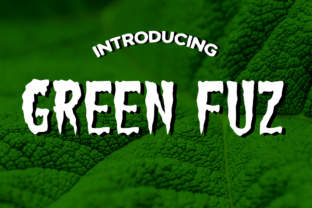
Green Fuz: A Gruesome Display Font for Horror-Inspired Design
Green Fuz is a striking decorative font that channels the eerie, over-the-top energy of 1950s American horror comics. With its jagged edges, uneven lines, and chaotic texture, this free font brings a sense of raw, unpolished intensity to any design project. It’s not for the faint of heart, but for those looking to make a bold statement, Green Fuz offers a unique visual language that stands out in a sea of standard typefaces.
Designed by Typodermic Fonts, Green Fuz is ideal for creative professionals who want to inject a bit of retro horror into their work. Whether you're working on a logo, a poster, or a social media graphic, this font can add an element of surprise and intrigue. Its distinctive look makes it perfect for projects that aim to evoke nostalgia, suspense, or a sense of the macabre.
The Visual Identity of Green Fuz
Green Fuz has a rough, hand-drawn aesthetic that mimics the look of old comic book lettering. The letters are uneven, with some parts appearing to be smudged or scratched, giving the impression of something hastily created. This irregularity adds to the font’s charm, making it feel more organic and less digital than many modern typefaces.
The font’s personality is playful yet unsettling. It doesn’t try to be elegant or refined; instead, it leans into its grotesque qualities, embracing the chaos of its design. This makes it particularly well-suited for genres like horror, fantasy, and satire, where a more traditional font might feel out of place.
Visually, Green Fuz is a hybrid of a serif and a script font. While it doesn’t have the fluid curves of a true script, its uneven strokes and exaggerated shapes give it a dynamic, almost handwritten feel. This versatility allows it to work in a variety of contexts, from editorial layouts to packaging designs, as long as the overall tone aligns with its edgy style.
Where Green Fuz Shines
Green Fuz excels in display applications where visual impact is key. It’s best used for headlines, titles, and short phrases that need to grab attention. In print, it can be a powerful tool for creating eye-catching posters, album covers, or event flyers. On the web, it works well for social media graphics, website headers, or promotional banners that aim to stand out.
For branding, Green Fuz can be a strong choice if your brand has a dark, quirky, or rebellious identity. It’s especially effective when paired with other bold or contrasting fonts that help balance its chaotic nature. For example, using a clean sans-serif font alongside Green Fuz can create a striking contrast that enhances readability without sacrificing style.
In editorial design, Green Fuz can be used to highlight key sections of a publication, such as a headline or a pull quote. Its dramatic appearance can add a layer of excitement to a layout, making it ideal for magazines, zines, or niche publications that cater to a specific audience.
Understanding Readability and Brand Perception
While Green Fuz is visually compelling, it’s important to consider its limitations when it comes to readability. Due to its uneven strokes and irregular spacing, it’s not suitable for large blocks of text. Using it for body copy would likely frustrate readers and detract from the message you’re trying to convey.
Instead, use Green Fuz strategically to draw attention to key elements in your design. When used correctly, it can enhance visual hierarchy, guiding the viewer’s eye toward important information. This makes it a valuable tool for designers who want to create a clear structure without relying on standard typography.
From a brand perspective, Green Fuz can reinforce a unique identity. If your brand is associated with creativity, rebellion, or a love of vintage aesthetics, this font can help communicate that message effectively. However, it’s crucial to ensure that it aligns with your overall brand strategy. A mismatch between your brand’s tone and the font’s style can confuse your audience and weaken your message.
Practical Tips for Using Green Fuz
If you're considering using Green Fuz in your next project, start by evaluating whether it fits the mood and purpose of your work. Ask yourself: Does this font enhance the message I’m trying to convey? Will it resonate with my target audience? These questions can help you determine if Green Fuz is the right choice for your design.
When testing Green Fuz, experiment with different sizes and placements. Sometimes, a smaller size can make the font feel more subtle, while a larger size can amplify its dramatic effect. Pair it with complementary fonts to see how they interact. A clean, modern sans-serif can provide balance, while a more ornate script might create a cohesive, thematic look.
Also, check the font’s licensing terms before using it commercially. Green Fuz is available for free, but it’s important to understand what you’re allowed to do with it. Some fonts may require attribution or have restrictions on commercial use, so always review the license carefully to avoid legal issues.
Finally, remember that Green Fuz is a tool, not a solution. It can elevate your design, but it won’t fix poor composition or weak messaging. Use it wisely, and let it serve the overall vision of your project rather than overshadowing it.
Real-World Applications of Green Fuz
Designers have used Green Fuz in a variety of creative ways. For example, a small independent publisher might use it for the title of a horror-themed anthology, adding a vintage, spooky vibe that matches the content. A local band could use it for a concert flyer, creating a sense of energy and unpredictability that reflects their music.
In packaging design, Green Fuz can be used to create a bold, attention-grabbing label for a product that aims to stand out on the shelf. It’s also a popular choice for Halloween-themed merchandise, where its grotesque style can enhance the overall aesthetic.
On the web, Green Fuz can be used for blog headers, social media posts, or landing pages that require a strong visual presence. When paired with appropriate imagery and color schemes, it can create a cohesive, immersive experience that captures the viewer’s interest.