Veni: A Timeless Choice for Elegant Typography
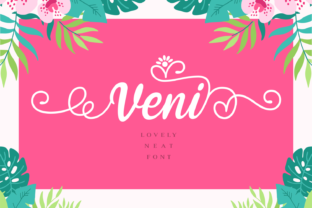
Veni is a font that exudes grace and sophistication, making it a popular choice for designers seeking a touch of femininity and refinement. With its flowing swashes and delicate details, Veni stands out in the world of typography, offering a unique aesthetic that can elevate any design project. Whether used in branding, invitations, or editorial layouts, Veni brings a sense of elegance that is both timeless and modern.
What Makes Veni Distinct?
Veni distinguishes itself through its intricate detailing and fluidity. The font features elegant swashes that give it a handcrafted feel, making it ideal for projects that require a personal or artistic touch. Unlike more rigid typefaces, Veni’s curves and flourishes add a sense of movement and softness, which can be particularly effective in designs targeting a feminine audience.
The balance between simplicity and complexity in Veni's design allows it to maintain readability while still providing visual interest. This makes it suitable for a range of applications, from logos and headings to body text in certain contexts. Its versatility lies in its ability to adapt to different styles without losing its core identity.
Comparing Veni to Similar Fonts
When considering fonts for elegant or feminine designs, Veni often comes up alongside other script and decorative typefaces. While each has its own strengths, Veni offers a unique blend of clarity and artistry that sets it apart. For instance, compared to fonts like Great Vibes or Dancing Script, Veni provides a more refined appearance, with less emphasis on exaggerated strokes and more on subtle detail.
In contrast to more traditional serif fonts, Veni introduces a level of whimsy and fluidity that can be difficult to achieve with standard typefaces. However, this also means that it may not be the best choice for all situations. In environments where legibility and minimalism are key, a simpler font might be more appropriate.
Strengths and Best-Fit Situations
Veni excels in scenarios where a design needs to convey warmth, charm, or a sense of personalization. It is particularly well-suited for wedding invitations, greeting cards, and branding materials that aim to create an emotional connection with the audience. The font’s natural flow and gentle curves can evoke feelings of elegance and sophistication, making it a strong choice for luxury or lifestyle brands.
Additionally, Veni works well in digital media such as websites or social media graphics, especially when used in headlines or decorative elements. Its visual appeal can draw attention and add a touch of class to otherwise straightforward layouts. However, it is important to use it strategically, as overuse can lead to a cluttered or unprofessional look.
Tradeoffs and Limitations
While Veni is a beautiful font, it is not without its limitations. One of the main tradeoffs is its suitability for large blocks of text. Due to its ornate style, Veni may not be the most readable option for extended paragraphs. In such cases, a more conventional sans-serif or serif font would be more practical and easier on the eyes.
Another consideration is the availability of different weights and styles. Unlike some widely used fonts, Veni may have limited variations, which can restrict design flexibility. This can be a challenge for designers who need multiple weights to create hierarchy or contrast within a layout.
When Veni Is the Right Choice
Veni is an excellent choice when the goal is to create a visually striking and emotionally resonant design. If a project requires a sense of authenticity, creativity, or individuality, Veni can help achieve that. It is particularly effective in branding for businesses in the fashion, beauty, or artisanal industries, where the visual identity plays a crucial role in customer perception.
For example, a boutique clothing line looking to establish a sophisticated image might use Veni in its logo and marketing materials to communicate a sense of craftsmanship and elegance. Similarly, a wedding planner could incorporate Veni into their branding to reflect the special and personal nature of their services.
When Other Options Might Be Better
There are situations where alternative fonts may be more appropriate. If a design requires a clean, modern look, a minimalist sans-serif like Lato or Montserrat might be a better fit. These fonts offer high readability and a professional appearance, making them ideal for business or technical content.
In cases where a more structured or formal tone is needed, a classic serif font such as Georgia or Times New Roman could be preferable. These fonts provide a timeless quality that is often associated with tradition and authority, which may be more suitable for academic, legal, or corporate contexts.
Practical Considerations for Using Veni
Before incorporating Veni into a design, it is important to consider the platform and medium where it will be used. Some digital environments may not support custom fonts, which could limit the font’s effectiveness. In such cases, using a similar web-safe font or converting the text to an image may be necessary.
Additionally, designers should test Veni in different sizes and contexts to ensure it maintains its visual appeal and readability. What looks great in a headline may not work as well in a smaller size or against a busy background. Testing across various devices and screen resolutions can help identify potential issues before finalizing a design.
Conclusion: Weighing the Options
Veni is a font that offers a unique combination of beauty and functionality, making it a valuable tool for designers working on elegant or feminine projects. Its flowing lines and intricate details can add a touch of sophistication that is hard to replicate with other typefaces. However, like any design element, it is important to use Veni thoughtfully and in the right context.
By understanding its strengths, limitations, and best-fit scenarios, designers can make informed decisions about whether Veni is the right choice for their specific needs. Whether used as a primary font or as a decorative element, Veni has the potential to enhance a design in meaningful ways. Ultimately, the decision should be based on the goals of the project and the preferences of the target audience.