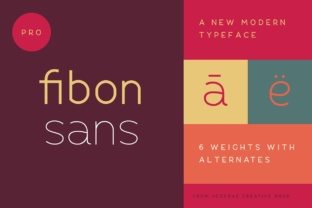
Fibon: A Minimalist Font for Creative Clarity
Fibon is a sans serif typeface that combines simplicity with elegance, making it an ideal choice for designers, marketers, and creators looking for a clean, professional look. Its minimal design allows it to blend seamlessly into a wide range of projects, from branding and web design to editorial layouts and digital content. Whether you're working on a personal project or a client's campaign, Fibon offers a versatile foundation that can elevate your creative output without overwhelming the viewer.
What makes Fibon stand out is its balance between form and function. It avoids unnecessary embellishments while maintaining a sense of refinement. This makes it particularly useful in situations where readability and visual harmony are key. The font’s consistent stroke weight and open letterforms ensure that it remains legible at various sizes, which is essential for both print and digital media.
Why Fibon Works Across Creative Projects
Fibon’s adaptability is one of its greatest strengths. It pairs well with other fonts, whether you’re using a bold display type for headings or a complementary serif for body text. This flexibility makes it a go-to choice for designers who want to maintain a cohesive visual identity across different platforms and formats.
For example, a small business owner might use Fibon for their website’s navigation menu and product titles, creating a modern, easy-to-read interface. Meanwhile, a blogger could use it for headlines and subheadings, ensuring that their content is both visually appealing and accessible to a broad audience. In both cases, Fibon contributes to a polished, professional aesthetic without requiring extensive design adjustments.
Its clean lines also make it suitable for long-form content. When used in body text, Fibon maintains clarity and reduces eye strain, which is especially important for articles, reports, and e-books. This practicality ensures that the font serves its purpose effectively, regardless of the medium or context.
Creative Applications of Fibon
The possibilities for using Fibon are nearly endless. One popular approach is to pair it with a more decorative typeface for contrast. For instance, a designer might use Fibon for headings and a script font for logos or callout text, creating a balanced composition that feels both modern and expressive.
Another effective use is in data visualization. Fibon’s uniformity helps keep charts, graphs, and infographics looking sharp and organized. This is particularly useful for marketing professionals or educators who need to present complex information in a clear, digestible format.
For personal projects, Fibon can be a powerful tool for storytelling. A writer might use it for a book cover or a portfolio site, giving their work a sleek, contemporary feel. Similarly, a photographer could use it for captions or gallery descriptions, adding a touch of sophistication to their online presence.
Adapting Fibon for Different Audiences and Goals
Fibon’s neutrality makes it adaptable to a wide range of audiences. For a corporate audience, it can convey professionalism and reliability. For a younger, more casual audience, it can offer a fresh, modern look. This versatility means that it can be tailored to fit the tone and message of any project.
Consider a nonprofit organization that wants to communicate a sense of trust and approachability. Using Fibon in their website copy and promotional materials can help reinforce that message without being too rigid or formal. On the other hand, a tech startup might use it to create a sleek, forward-thinking brand identity that resonates with innovation-focused audiences.
When working with Fibon, it’s important to consider the overall design language of the project. While the font itself is simple, how it’s used—such as through spacing, color, and layout—can greatly influence its impact. Experimenting with different weights and sizes can also help highlight key elements and guide the viewer’s attention.
Best Practices for Using Fibon
To get the most out of Fibon, start by defining the purpose of your project. Are you aiming for a minimalist aesthetic, a modern look, or a clean, readable format? Once you have a clear goal, you can adjust the font’s usage accordingly.
One practical tip is to limit the number of fonts you use in a single design. While Fibon pairs well with many typefaces, using too many can create visual clutter. Stick to two or three complementary fonts to maintain a cohesive and professional appearance.
Additionally, pay attention to typography hierarchy. Use Fibon for headings, subheadings, and body text, but avoid overusing it in a way that diminishes its impact. By strategically placing it within your design, you can ensure that it enhances rather than overwhelms the overall composition.
Finally, test Fibon in different contexts. View it on screens of varying sizes, print it in different formats, and see how it performs in real-world scenarios. This will help you identify any potential issues and refine your approach for optimal results.
Conclusion: Fibon as a Creative Asset
Fibon is more than just a font—it’s a tool that supports creativity, clarity, and consistency. Its minimal design and wide range of applications make it a valuable addition to any designer’s toolkit. Whether you’re working on a personal project, a business campaign, or a digital platform, Fibon can help you achieve a clean, professional look that resonates with your audience.
By understanding its strengths and adapting it to your specific needs, you can unlock new possibilities for your creative work. With Fibon, every project has the potential to stand out—not through complexity, but through thoughtful, intentional design.