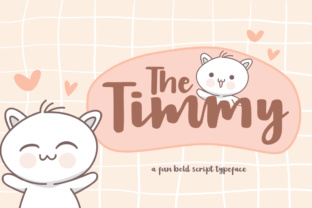
The Timmy: A Bold and Cheerful Script Typeface
The Timmy is a distinctive script typeface known for its playful and dynamic appearance. Designed with a bouncy baseline and a handwritten aesthetic, it brings a sense of warmth and fun to any project. This font is ideal for those looking to add a touch of personality and energy to their design work.
What Is The Timmy?
The Timmy is a script typeface that stands out due to its unique visual characteristics. Its design incorporates fluid lines and a slightly irregular structure, giving it a handcrafted feel. The font's baseline is not perfectly straight, which contributes to its lively and energetic look. This makes it particularly well-suited for projects that aim to convey a sense of joy or creativity.
Why Consider The Timmy?
For designers and creators seeking a font that adds a personal and expressive touch, The Timmy offers several advantages. Its handwritten appeal can make text feel more approachable and authentic. This is especially beneficial in branding, where a friendly and inviting tone is desired. Additionally, the font's boldness ensures it remains legible even at smaller sizes, making it versatile for various applications.
Another reason to consider The Timmy is its ability to stand out in a crowded design landscape. In a world dominated by more rigid and formal typefaces, The Timmy provides a refreshing alternative. It can be used effectively in logos, headlines, and other visual elements that require a unique identity.
Benefits of Using The Timmy
The primary benefit of The Timmy is its ability to convey emotion through typography. Its informal and bouncy style can evoke feelings of happiness, playfulness, and spontaneity. This makes it an excellent choice for projects targeting younger audiences or those aiming to create a relaxed atmosphere.
The font's versatility is another key advantage. It can be used in both digital and print formats, and its design allows it to work well in a variety of contexts. Whether it's for a children's book, a marketing campaign, or a social media post, The Timmy can adapt to different needs while maintaining its distinct character.
Considerations and Tradeoffs
While The Timmy has many strengths, it may not be suitable for every project. Its informal nature might not align with the tone of more professional or serious designs. In such cases, a more traditional typeface could be a better fit. Designers should also consider the readability of the font in long blocks of text. While The Timmy is legible at smaller sizes, it may not be the best choice for body copy in printed materials.
Another consideration is the availability of the font. Depending on the platform or software being used, access to The Timmy may vary. Users should verify compatibility before incorporating it into their workflow. Additionally, licensing terms may differ, so it's important to review these carefully to ensure proper use.
Situations Where The Timmy Excels
The Timmy is particularly effective in projects that emphasize creativity, youth, or a casual vibe. For example, it can be used in branding for businesses targeting a younger demographic, such as a boutique, a creative agency, or a tech startup. It also works well in advertising campaigns that aim to capture attention with a bold and eye-catching design.
In editorial design, The Timmy can add a unique flair to headlines, captions, or other short-form text. It is also a good choice for event invitations, posters, and promotional materials where a friendly and engaging tone is desired. Its handwritten appeal can make a design feel more personal and authentic, which is valuable in building a connection with the audience.
When Alternatives May Be Better
For projects that require a more formal or structured look, alternatives to The Timmy may be more appropriate. Fonts with a clean, geometric, or serif style can provide a more polished and professional appearance. These types of fonts are often preferred in industries such as finance, law, or academia, where a sense of authority and reliability is essential.
Additionally, if the goal is to maintain consistency across a large body of text, a more standardized typeface might be a better option. While The Timmy is visually appealing, it may not be the most practical choice for extended reading. In such cases, a sans-serif or serif font could offer better readability and a more cohesive visual experience.
Decision-Making Insights
When deciding whether to use The Timmy, it's important to evaluate the specific goals of the project. Ask questions such as: What message does the design need to convey? Who is the target audience? What is the overall tone and style of the work?
Testing the font in different contexts can also help determine its effectiveness. Experimenting with various sizes, colors, and layouts can reveal how well The Timmy performs in real-world scenarios. This process can provide valuable insights into whether the font meets the needs of the project.
Finally, considering the broader design ecosystem is crucial. The Timmy should complement other elements of the design, such as color schemes, imagery, and layout. Ensuring harmony between all components will result in a more cohesive and impactful final product.